



How should conventional fishing tools be selected and used? At the workover site, the most error-prone factor is not the tools, but judgment.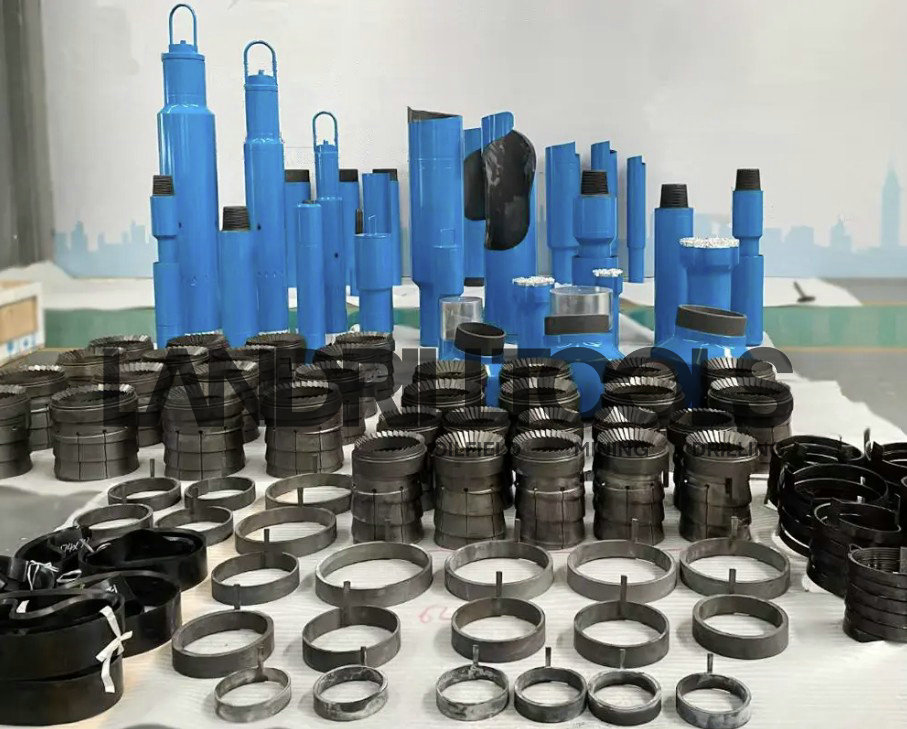
Fishing operations are often regarded as simply “running a tool to retrieve the fish,” but in reality, it is far more complex. Downhole fish may be parted at the bottom, leaning against the casing, have a deformed fish top, be sand-covered, pinned by other junk, stuck at a certain point, or severely corroded. Sometimes the tool has already “latched onto” the fish, yet the string cannot be pulled. Sometimes an increase in hook load does not necessarily mean the fish is securely engaged. More troublesome still, an ordinary piece of junk, through improper handling, can turn into a situation where both the fishing tool and the fish become stuck downhole.
Therefore, what truly tests the crew is not how many tool names they can memorize, but on-site judgment: What is the fish downhole? What is the condition of the fish top? Should the tool engage from the inside (e.g., a taper tap) or fit over from the outside (e.g., an overshot)? Once engaged, can it be pulled? If it cannot be pulled, is there a release mechanism? This is the core of fishing operations.
1. Before fishing, don’t rush to run the tool
On site, I believe the most important step in a fishing job often happens before the tool goes downhole. At a minimum, the following questions must be clarified.
What is the fish?
Is it tubing? Sucker rod? A coupling? A pump? A packer? Or the remnant of some downhole tool? Different fish require completely different tool selection philosophies.
Where is the fish top?
Do not rely solely on the designed depth. The actual fish depth may differ from the original calculation, especially in cases of: string parting; fish sliding down; high well deviation; sand fill at the bottom; multiple previous fishing attempts. Therefore, when running the tool, the fish top position must be confirmed step by step through actual tagging, hook load, and changes in pipe tally.
What is the condition of the fish top?
This is the key to fishing success or failure. The fish top may be: flat; parted; burred; deformed; deflected; sand-covered. For the same piece of tubing, if the fish top is intact, a taper tap can be run directly; if the fish top is deformed, it may first be necessary to dress the fish or mill over it. Choosing the wrong tool is often not a problem with the tool itself, but a problem with the judgment of the fish top.
2. Taper tap and die collar: whether you can make up a thread depends on whether the fish top gives you the chance
The taper tap and die collar are very classic thread-forming fishing tools at the workover site. Simply put: the taper tap enters the inside of the fish and cuts a thread; the die collar cuts a thread from the outside of the fish. What they have in common is that they do not simply “grab” the fish, but form a connection through threads. Therefore, the fish top must have certain conditions suitable for thread forming.
- How should the taper tap be operated?
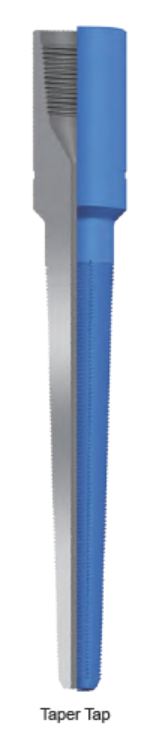
When running the tool, do not apply heavy weight right away. Usually, you should slowly run in and feel for the fish, gradually confirming the fishing pipe tally. After confirming that the tool has contacted and entered the fish top, then apply appropriate weight on bit. The common operating approach is: low-speed rotation, appropriate weight on bit, and gradual thread forming. At the site, the weight on bit is commonly about 20–30 kN, the rotary speed about 10–20 r/min; after several turns of thread forming, pick up and observe the hook load.
Why pick up and observe?
Because rotation alone cannot prove success. The truly valuable signal is: whether the hook load increases when picking up. If the hook load increases, it indicates a high possibility that an effective connection has been formed between the tool and the fish. If it does not increase, do not immediately conclude that “the fish was not caught.” It may be due to: insufficient thread-forming depth; threads not fully engaged; deformed fish top; the tool not being aligned with the fish top; or the fish itself being relatively light. In this case, readjust the position and try again.
- The difficulty with the die collar lies in the outside of the fish top
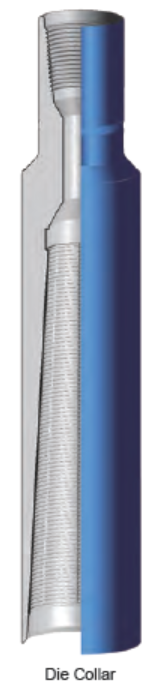
The die collar appears to fit over the fish from the outside, but in practice it is not necessarily simpler than the taper tap. If the outside of the fish top is: severely deformed; burred; disturbed by other junk; the die collar may not be able to enter smoothly. Therefore, when operating the die collar, special attention must be paid: do not force excessive weight just to “get the tool down.” If the tool has already become severely stuck, continuing to apply weight may deform the fish top even more.
- What should be done if it becomes stuck after the thread is formed?
This is the stage of thread-forming fishing that requires the greatest caution. Because at this point two completely different situations may occur: First, the fish has not actually been caught — the hook load change is not obvious, and the torque has not shown a stable response. Second, the fish has been caught, but it cannot be pulled — if you continue to pull hard at this point, it may cause: the fish top to pull out; the string to part; tool damage; and further complication of the downhole situation. If the fish still cannot be freed after working the string, rotating, and applying pressure, back-off may be considered according to the design plan.
During back-off, do not look at only one parameter. It is necessary to comprehensively observe: hook load; torque; and changes in drill string loading. If the hook load gradually decreases and the torque decreases simultaneously, it indicates that the downhole connection state may have changed. At this point, pick up slowly and confirm that the drill string has returned to normal loading before pulling out of hole.
3. Sliding-sleeve slip fishing spear: after entering the fish, the key is to “grip firmly”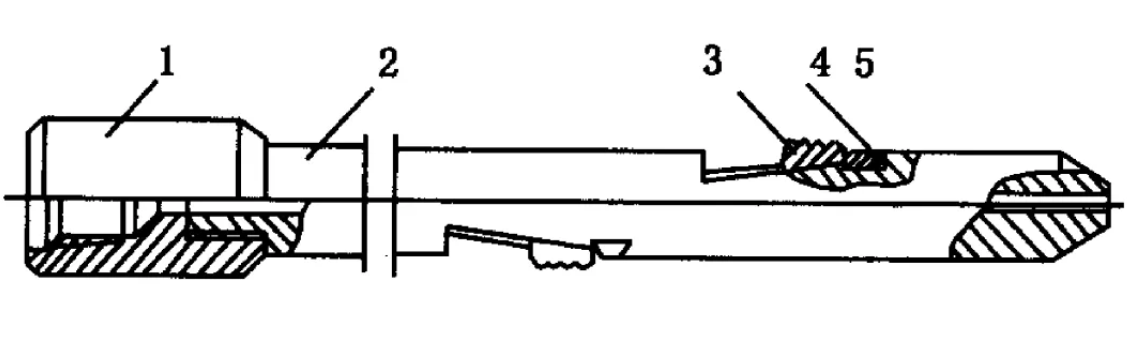
The sliding-sleeve slip fishing spear is an internal fishing tool. Its basic principle is: the tool enters the inside of the fish body, and the slips expand to grip the inner wall. One action is very important during operation: record the hook load before approaching the fish top. Why? Because all subsequent judgments need a baseline. After the tool enters the fish, the hook load may change. After the fish is caught, the hook load may also increase when picking up. Without the original hook load, it is difficult to judge what the subsequent changes actually mean.
Do not force weight directly when encountering resistance
When the tool is run near the fish top, if resistance is encountered: try slow rotation; changing the tool angle; making small-range position adjustments; and coordinating with slow lowering. The purpose is not to “push the tool in,” but to let the tool find the opportunity to enter the fish bore. After the tool enters the fish, then slowly pick up. If the hook load increases, it indicates a high possibility that the fish has been caught successfully. But it is still recommended: do not immediately pull out of hole with a large load just because of one change in hook load. It should be gradually confirmed based on the weight of the fish, the well depth, and the loading on the string.
4. Releasable fishing spear: why is it more valuable under complex well conditions?
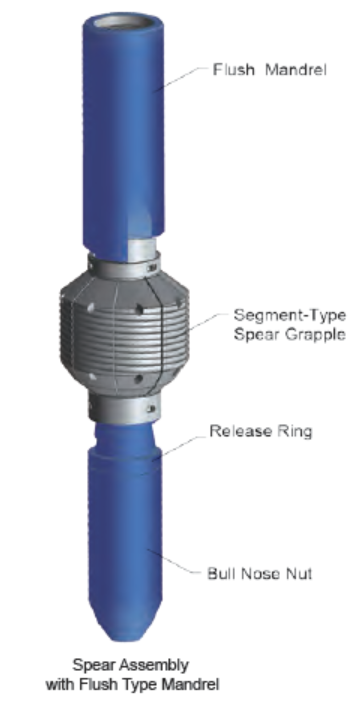
What is the biggest fear with fishing tools? It is not failing to catch the fish. It is: after catching the fish, discovering that the situation is wrong, yet being unable to release. That is where the value of the releasable fishing spear lies. It considers not only “how to catch,” but also “how to release after catching the wrong thing.”
When running in, wash over, rotate, and lower simultaneously
After approaching the fish top, the tool must not be rushed down quickly. It needs to enter the fish gradually through: washing; rotation; and slow lowering. When the hook load decreases, it usually indicates that the tool has entered to a certain depth. At that point, perform the catching action according to the tool structure. The common operation is to rotate counterclockwise 1–2 turns, and increase as appropriate according to site conditions if necessary. Then slowly pick up. If the hook load increases, it indicates a high possibility that the catch has been successful.
What should be done when release is needed?
If it is judged that release is needed, the operation must follow the tool’s release method. Release is usually completed through: downward jarring + clockwise rotation + slow picking up. A special reminder here: the release actions of tools of different models and different manufacturers may differ. At the site, you must not operate simply based on “I have used a similar tool before.” Before running in hole, you must confirm: tool structure; catching direction; release direction; allowable load; rotation limits. The biggest taboo with fishing tools is “operating from impression.”
5. Back-off fishing spear: failing to pull the fish does not mean you can only pull hard
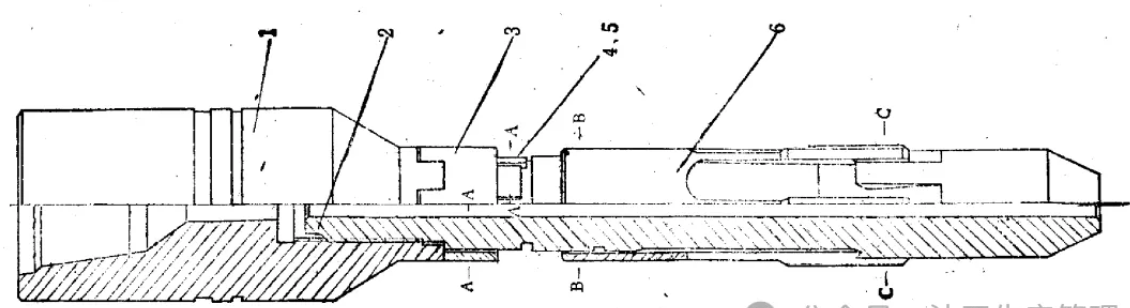
The typical application scenario of the back-off fishing spear is: the tool has already caught the fish, but the fish is stuck. At this point, continuing to pull is usually not a good approach, because the fish may become more and more stuck the harder you pull. The idea of the back-off fishing spear is: first establish an effective connection, then use back-off to gradually break loose the stuck string.
During operation, after the tool approaches the fish top, rotate while lowering; after confirming that it has entered the fish, perform back-off according to the designed load. During back-off, if the hook load gradually decreases and the torque changes noticeably, it indicates that the downhole connection state may have changed.
But there is a very important principle here: back-off is not “the more force, the better.” It is necessary to consider: the torsional strength of the drill string; the load capacity of the tool; the connection strength of the string; and the actual downhole sticking conditions. Once the safe load is exceeded, the result may be: the fish is not backed off, but the drill string parts first. That is not solving the problem, but adding a new fish.
6. Tubing coupling fishing spear: identify the coupling and grip the critical position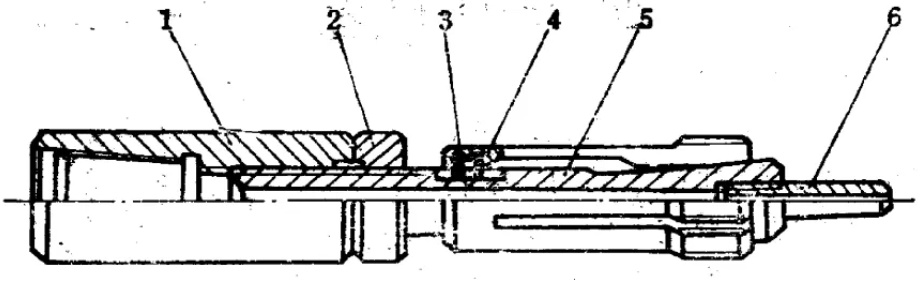
The tubing coupling fishing spear is mainly used for coupling-type fish. When the tool approaches the fish top, the usual approach is: rotation, lowering, and circulation in combination. When the hook load drops noticeably and the pump pressure rises at the same time, it indicates that the tool may have entered the target position. At this point, do not pull hard. Pick up slowly and observe the hook load. If the hook load increases, it indicates that the tool has achieved a gripping effect.
The key to operating this type of tool is: do not mistake “the tool encountering resistance” for “the fish has been caught.” The real judgment must combine: tagging; hook load; pump pressure; and rotation status.
7. Hydraulic fishing spear: pump pressure is your “operating feedback”
The hydraulic fishing spear has fairly distinct characteristics. Its catching action is related to changes in pump pressure. After the tool is run to the fishing tagging depth, start the pump and build up pressure, and observe the pump pressure change. When the pump pressure rises and remains stable, then pick up slowly. If the hook load increases, it indicates a high possibility that the fish has been caught. However, in deep wells or with light fish, the change in hook load may be very small. In this case, you cannot judge success or failure after just one operation. The catching action can be repeated several times according to actual conditions. Finally, make a comprehensive judgment based on: pump pressure; hook load; tagging; and overall conditions.
8. Releasable slip overshot: fitting over the fish from the outside
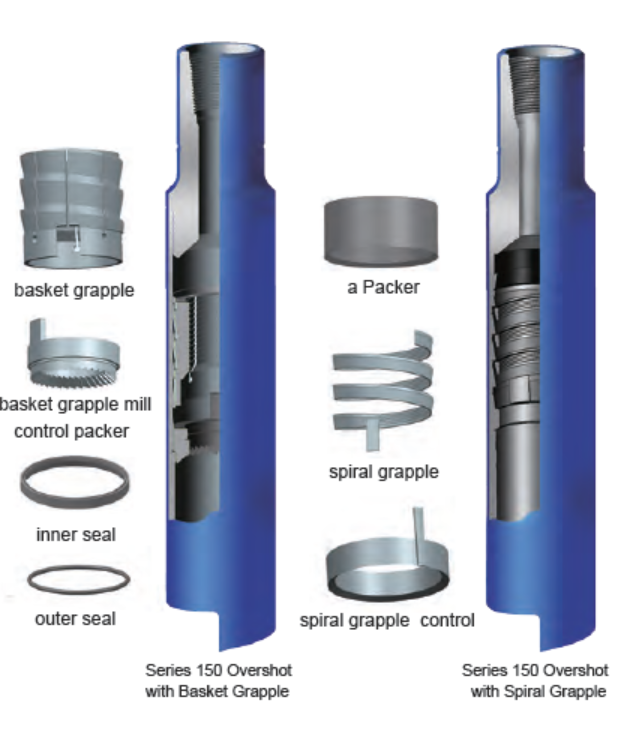
A fishing spear “grabs from the inside.” An overshot, by contrast, fits over the fish from the outside and then grips it with slips. When approaching the fish top, it usually requires: rotation; lowering; and circulation. As the tool gradually enters the fishing position, pump pressure may rise and hook load may decrease. This indicates that the tool may be fitting over the fish body. What should be done next is not to pull hard, but to: pick up slowly and observe whether the hook load increases. Confirm the grip before deciding to pull out of hole. If release is required, the corresponding downward jarring, rotation, and picking-up actions must also be carried out according to the tool structure.
9. Windows overshot: when the fish top is irregular, give the tool a “chance to enter”
One feature of the windows overshot is that it allows the tool to handle an irregular fish top to a certain extent. After the tool approaches the fish top, it is necessary to start the pump and circulate, then slowly rotate and lower. When the hook load drops noticeably, it indicates that the tool may have entered the fishing position. After that, pick up slowly and observe the change in hook load. If the fish is relatively short, the change in hook load may not be obvious. In this case, you can repeatedly adjust the tool position up and down and observe: whether the same tagging is encountered again; whether there is a new change in hook load; and whether the tool shows obvious resistance. This operation is essentially confirming: whether the tool has merely touched the fish, or has actually fitted over the fish. These two are not the same thing.
10. Washover Milling: not to “grind away the fish,” but to create space for fishing
Washover is often simply understood as: “milling away whatever is around the fish.” That understanding is incomplete. The real purpose of milling over is usually to: clean sand around the fish; remove obstructions; dress the fish top; increase the space for tool entry; and create conditions for the next fishing step. Therefore, milling over is not a “last resort” after a failed fishing attempt. In many cases, it is part of the fishing plan from the start.
During Washover, weight on bit and rotary speed cannot be based on experience alone
Common operating ranges: weight on bit about 10–20 kN; rotary speed about 50–100 r/min. But these are not fixed answers. What really needs to be adjusted according to site conditions is: well depth; annulus size; well deviation; fish material; workover fluid properties; and cuttings-carrying capacity. Flow rate in particular. If the flow rate is too low, cuttings cannot be carried out. After cuttings accumulate at the bottom of the well, the result may be: the more you mill, the more stuck it becomes. Therefore, during milling over, close attention must always be paid to the returns.
11. The most common mistake during milling over: stopping the pump while the tool is still on the fish top
Making a connection requires stopping the pump, which is a common situation on site. But before stopping the pump, the tool must not be left sitting on the fish top. The correct practice is: pick up the tool; move the tool off the fish top; work the drill string as appropriate; and try to avoid cuttings settling around the tool. Before stopping the pump, circulate sufficiently to ensure that the returns at the bottom of the well are basically stable. If a large amount of cuttings remains at the bottom and has not been carried out, stopping the pump rashly may result in: the cuttings settling and burying both the tool and the fish.
12. Washover in open hole: do not be greedy for footage
Washover in open hole carries significantly higher risk. A very practical principle is: take small footage and verify frequently. After washing over a certain distance, pick up the tool in time to confirm: whether the drill string can move freely; whether sticking occurs; whether the torque is abnormal; and whether the pump pressure is normal. After confirming that there are no problems, continue the operation. Do not think: “Since we are already down there, let’s wash over a few more meters first.” The biggest fear in downhole operations is exactly this kind of continuous operation. You may think you have only washed over a few extra meters, but in reality the tool may have already entered a state from which it cannot be freely withdrawn.
13. When there is no footage during milling, do not just think about increasing weight on bit
No footage during milling is a very important abnormal signal. If it is accompanied by: erratic torque and bouncing; abnormal torque; reverse rotation (backing off); and pump pressure changes; you must stop and reassess. Possible causes include: the milling tool is unsuitable; the tool has become dull; the material of the object being milled has changed; cuttings are not being removed smoothly; the tool is wearing unevenly (eccentric wear); and accumulation has formed at the bottom of the well. At this point, continuing to increase weight on bit will often only make the problem worse. The truly reasonable approach is: first analyze why there is no footage, then decide whether to adjust weight on bit, rotary speed, flow rate, or change the tool.
14. Milling operations must protect the casing
During milling, you must not focus only on milling efficiency. Once the casing is severely worn, the subsequent problems may be more troublesome than the original fish. Therefore, before the operation, consider: drill string stability; tool deflection; the effect of well deviation; and casing protection. If necessary, add drill collars or centralizers to the drill string to reduce eccentric wear and wobble of the tool. In one sentence: the goal of milling is to deal with the fish, not to wear away the casing along the way.
15. At the fishing site, these are the signals that are truly valuable
During fishing, many people focus on only one question: “Has the fish been caught?” But what should really be monitored on site is a set of parameters.
Hook load
A decrease in hook load may mean: the tool has entered the inside of the fish; the tool has fitted over the outside of the fish; or the tool has encountered some kind of resistance. An increase in hook load may mean: the fish has been caught; the tool has formed a connection with the fish; or sticking has occurred downhole. So: a change in hook load itself is not the answer, only a clue.
Torque
Changes in torque can help determine: whether a thread has been formed; whether sticking has occurred; whether back-off has been successful; and whether the tool is under abnormal loading. In particular, a sudden rise or sudden drop in torque is often worth close analysis.
Pump pressure
Changes in pump pressure are an important reference for: hydraulic fishing spears; overshots; washover; and milling. An increase in pump pressure does not necessarily mean the fish has been caught. It may also be: annulus plugging; cuttings accumulation; or the tool entering a special position. It must be judged together with other parameters.
Returns
What comes back at the wellhead often explains more than a theoretical diagram. If you see: iron filings; metal flakes; sand; rubber; or oily sludge; all should be analyzed in the context of the current stage of the operation. Sometimes a small piece of metal debris may indicate that: wear, breakage, or a new fracture is occurring downhole.
16. How to quickly select conventional fishing tools?
You can start with this logic:
- Fish ID is intact: give priority to a fishing spear (捞矛)
- Fish OD conditions are good: give priority to an overshot (捞筒)
- Fish top can be threaded: consider a taper tap or die collar (公锥、母锥)
- Target is a coupling: consider a tubing coupling fishing spear (油管接箍捞矛)
- Hydraulically controlled gripping is needed: consider a hydraulic fishing spear (水力捞矛)
- Fish top is irregular: consider a windows overshot (开窗捞筒)
- Fish already caught but cannot be pulled: consider back-off tools or a freeing plan (倒扣工具或解卡方案)
- Insufficient space around the fish: consider washover (套铣)
- Fish top is severely deformed or needs dressing: consider milling or dressing the fish (磨铣或修鱼)
But remember: tool selection is not based on the name of the fallen object, but on the condition of the fallen object. A piece of tubing may be fished with a spear, with an overshot, or may need washover first. What really determines the plan is: the fish top, the wellbore, the condition of the fish, and the conditions for pulling it out.
17. Conclusion: In fishing operations, the most expensive thing is not the tool, but a wrong judgment
There is a very realistic saying at the workover site: run the wrong trip, and what you lose is not just time. One trip may mean: equipment occupancy; personnel waiting; workover fluid consumption; delayed production; and increased operating costs. What is even more troublesome is that if the wrong tool is selected or an operation is mishandled, new downhole fish may also be created.
Therefore, truly mature fishing operations are not about having as many tools as possible, nor about increasing weight on bit whenever a problem arises. Rather, it is about forming a clear judgment logic: first confirm the fish top, then select the tool; first make contact with a small load, then observe the parameters; after confirming the catch, then decide to pull out of hole; after encountering sticking, first analyze the cause, then decide whether to work the string, back off, release, or redesign the plan.
In the final analysis: fishing tools are the means, and downhole judgment is the core. Tools can be replaced. Once the fish top is damaged, it is often difficult for the downhole situation to return to its original state. So the most important experience in workover fishing is not “daring to run the tool,” but knowing when to run it, when to stop, and when you absolutely must not keep forcing ahead.
LANDRILL specializes in fishing tools more than 20 years. Should you have any needs in this regard, welcome to contact us.
Post time: Nov-05-2026


 5-1203,Dahua Industrial Zone, No.2 Yunshui Road,Hi-tech development zone, Xi'an, 710065,China
 86-13609153141


