



Detailed Explanations
1. Cast Iron Bridge Plug (The Traditional Workhorse)
- What it is: The original and most permanent type of bridge plug. It’s constructed from cast iron and other steel components.
- How it works: It is set in the casing using a wireline, tubing, or coil tubing. A slip-wedge system rams metal slips into the casing wall, and packing elements are expanded to create a gas-tight seal.
- Key Differentiator: Permanent and Extremely Strong. Its primary advantage is its immense compressive and tensile strength. It is designed to be a permanent, one-way block.
- Removal: Can only be removed by milling (grinding it up with a specialized downhole tool). This is a time-consuming, expensive process that requires a drilling rig and creates a significant amount of metal debris that must be circulated out of the well.
- Best For:
- Permanent well abandonment.
- Situations where a absolute, no-fail barrier is required for safety.
- Isolating zones with very high pressure differentials.
2. Composite Bridge Plug (The Modern “Drillable” Standard)
- What it is: A bridge plug made from engineered composite materials—typically a blend of glass fibers, carbon fibers, and resins.
- How it works: Functions identically to a cast iron plug in terms of setting mechanics (slips, packing elements). However, the materials are much lighter and easier to drill.
- Key Differentiator: Easily Drillable. This is its main purpose. The composite materials are strong enough to hold significant pressure during operations but are deliberately frangible, meaning they break apart easily under the mechanical force of a drill bit.
- Removal: Removed by drilling or milling. The process is much faster than milling cast iron. The debris is a fine, non-metallic, and non-abrasive powder that is much easier to clean out of the wellbore, reducing the risk of damaging downstream equipment.
- Best For:
- Multi-stage hydraulic fracturing (“Fracking”) in horizontal wells. Dozens of these plugs are set to isolate stages, and then they are all drilled out in a single, efficient operation.
- oTemporary zonal isolation for testing or production.
- oAny situation where you know you will need to remove the plug and resume drilling or production.
3. Dissolvable Bridge Plug (The “Set-and-Forget” Innovation)
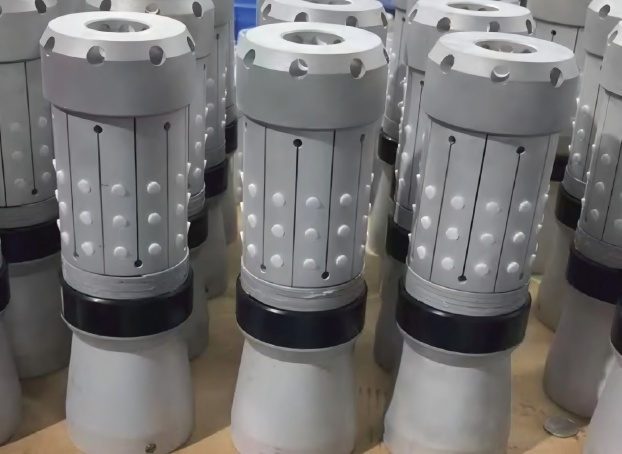
- What it is: The most advanced type, made from metals (like magnesium or aluminum alloys) or polymers engineered to dissolve predictably when exposed to specific wellbore fluids, temperature, and pressure.
- How it works: It is set like any other plug. The difference is what happens after its job is done. You pump a specific fluid (e.g., a brine or acid) or simply wait for the native well fluids to trigger the dissolution process.
- Key Differentiator: No Intervention Required for Removal. The plug literally disappears on its own, leaving an open wellbore.
- Removal: It dissolves chemically over a pre-determined time frame (e.g., hours, days, weeks). The dissolution rate is engineered based on fluid chemistry and downhole temperature.
- Best For:
- Extreme applications where intervention (e.g., sending a drill string) is prohibitively expensive, risky, or impossible (e.g., very long lateral wells, subsea completions).
- Wells with Electrical Submersible Pumps (ESPs), where even the fine powder from composite plugs can damage the pump. A dissolved plug leaves no debris.
- “Frac-and-flow” completions where producers want to begin production immediately after fracturing without a drill-out operation.
Comparison Table
|
Feature |
Cast Iron Bridge Plug |
Composite Bridge Plug |
Dissolvable Bridge Plug |
| Primary Material | Cast Iron, Steel | Composite (e.g., glass fiber, carbon fiber, engineered plastics) | Specialized Alloys (e.g., Mg, Al) or Polymers |
| Key Characteristic | Strong, Permanent | Drillable, Creates Less Debris | Disappears on its Own, No Intervention |
| Method of Removal | Milling/Driiling (Difficult) | Milling/Driiling (Easier) | Dissolution by Wellbore Fluids |
| Debris After Removal | Significant metal chips and shavings | Fine, non-abrasive powder | Very fine, non-reactive powder |
| Primary Use Case | Permanent Abandonment, where extreme strength is needed | Temporary Zonal Isolation, Multi-Stage Fracking | Complex Completions, ESPs, where intervention is costly/risky |
| Cost | Lower (Tool Cost) | Moderate (Tool Cost) | Higher (Tool Cost) |
| Operational Cost | High (Rig time for milling) | Moderate (Rig time for milling) | Very Low (No rig time for removal) |
Landrill are manufacturing and supplying high performance dissolvable frac plugs to help you reduce completion time and save cost.
Post time: Oct-17-2025

 5-1203 Dahua Digital Industrial Park Tiangu 6th Road,Hi-tech development Zone Xi'an, China
  86-13609153141

