



In the subsurface defense line of oil and gas production, packers are core equipment that prevent crossflow of formation fluids and ensure wellbore safety. However, sealing performance requirements vary drastically across different well conditions: shallow conventional wells only need basic sealing, while ultra-deep high-temperature sour wells require zero-leakage protection.
The API 11D1 Standard for Downhole Tools—Packers and Bridge Plugs in the Petroleum and Natural Gas Industry clearly specifies that packer grades increase incrementally from V6 to V0; the smaller the number, the more stringent the performance requirements—V6 is the basic entry-level, while V0 is the ultimate performance grade, with each grade corresponding to clear testing standards and applicable scenarios.
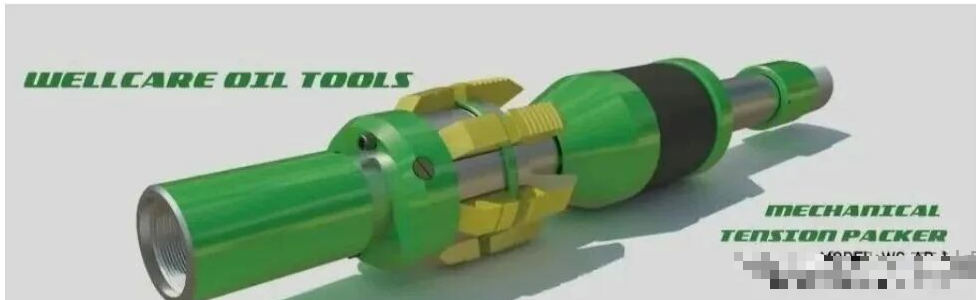
Today we break down the technical core, applicable scenarios, and testing requirements of Grades V2, V1, and V0 to help you select the right downhole “guardian.”
First, understand: Why does API 11D1 “grade” packers? The complexity of oil and gas wells is far beyond imagination: shallow wells may only withstand 10 MPa pressure and 50°C temperature, while deep-sea gas wells can exceed 100 MPa in pressure, some gas wells often exceed 170°C in temperature, and sour wells face constant corrosion risks. Mismatching a low-grade packer with a high-pressure well (like “using a small horse to pull a heavy cart”) may cause seal failure and blowout risk; conversely, using ultra-high-end packers in conventional wells wastes costs.
For gas production wells and injection wells, API 11D1 specifies verification testing requirements for three grades: V2, V1, and V0.
Grade V2: Entry-Level for Gas Sealing
Standard Technical Definition: V2 incorporates gas sealing testing for the first time; it is the minimum entry-level for gas-well packers, with the core assessment focusing on sealing reliability in multiphase flow environments.
Applicable Well Conditions
- Deep wells (4,000–5,000 m)
- Operating pressure ≤ 138 MPa (≈ 1,400 kgf/cm²)
- Operating temperature ≤ 177°C
- Medium: Multiphase flow with gas-oil ratio (GOR) > 500, containing small amounts of H₂S (partial pressure ≤ 0.07 MPa)
- Significant pressure fluctuations (e.g., production wells after conventional fracturing operations)
Typical Scenarios
Onshore conventional gas wells, development wells in low-sulfur reservoirs.
Testing Requirements
- Must first pass the full V3 test suite
- Gas sealing test: Using nitrogen as the medium, hold pressure at 80% of rated pressure for 15 minutes; leakage rate ≤ 10 standard cubic centimeters per minute (sccm)
- Enhanced axial load test: Apply ±100 kN axial force, combined with pressure cycle testing
- A quantitative gas sealing test report must be provided
Grade V1: Adapted to Extreme Dynamic Environments
Technical Definition: Based on V2, V1 enhances temperature cycle and dynamic load coupling testing; it adapts to severe operating condition fluctuations under high pressure/high temperature, and is the primary choice for deep-sea/ultra-deep wells.
Applicable Well Conditions
- Ultra-deep wells (5,000–6,000 m)
- Operating pressure ≤ 172 MPa (≈ 1,750 kgf/cm²)
- Operating temperature ≤ 204°C (temperature fluctuation range ≤ 100°C)
- Medium: Contains H₂S (partial pressure ≤ 0.5 MPa) and CO₂ (partial pressure ≤ 8 MPa)
- Severe dynamic loads (e.g., fracturing of shale gas horizontal wells, deep-sea tubular string vibration)
Typical Scenarios
Shale gas horizontal wells, deep-sea oil wells, development phase of high-sulfur gas wells.
Testing Requirements
- Must first pass the full V2 test suite
- Temperature cycle test: Cycle 10 times between -29°C and 204°C, holding pressure for 2 hours each time with no leakage
- Dynamic pressure cycle: Cycle 500 times between 0 and 100% of rated pressure, including pulsed pressure shocks
- Gas leakage rate requirement: ≤ 0.1 sccm Simulate tubular string expansion/contraction (±50.8 mm) and radial deformation; sealing performance remains unchanged
Grade V0: The Ultimate “Guardian”, Zero-Leakage Safety Baseline
Technical Definition: V0 is the highest grade in API 11D1; it covers all lower-grade test items, with additional “zero-bubble gas sealing” and “pressure reversal testing”—it is the “last line of defense” for extreme environments.
Applicable Well Conditions
- Ultra-deep ultra-high-temperature wells (> 6,000 m)
- Operating pressure > 103 MPa, temperature > 177°C (high-pressure high-temperature (HPHT) environment)
- Medium: Contains high-concentration H₂S (partial pressure ≥ 1 MPa) and CO₂ (partial pressure ≥ 10 MPa)
- Requires permanent sealing (e.g., wellbore plug and abandonment (P&A) operations) or extreme safety requirements (e.g., nuclear waste disposal wells)
Typical Scenarios
High-sulfur gas wells in the Sichuan Basin, deep-sea ultra-high-pressure gas reservoirs, geothermal wells.
Testing Requirements (Most Stringent Standards)
- Must first pass the full V1 test suite
- Zero-bubble gas sealing: Using helium as the medium, hold pressure at rated pressure for 15 minutes; no bubble accumulation in the graduated cylinder (leakage rate approaching zero)
- Pressure reversal testing: Perform 2 pressure direction reversals at maximum rated pressure, with no seal failure
- Enhanced temperature cycle: Rapidly cool from 204°C to -29°C, hold pressure, then reheat; sealing remains effective throughout
- Vacuum leak detection technology must be used to achieve qualitative + quantitative leak detection
3 Core Principles to Avoid Selection Pitfalls
(1) Choose at least Grade V2 for gas wells, at least Grade V1 for sour wells, and must choose Grade V0 for HPHT wells;
(2) Upgrade the grade based on dynamic loads: For wells with fracturing/acidizing operations, upgrade the base grade by 1 level (e.g., V2 → V1);
(3) Check certification coverage: Grade V0 can cover all lower-grade scenarios, but ensure the test report includes target well condition parameters (e.g., temperature, pressure, medium).
Key Reminder: Grade “Inclusion Relationship”
API 11D1 clearly specifies that higher-grade packers automatically cover lower-grade performance. For example: A product certified to Grade V0 can be directly used in Grade V1–V6 scenarios; however, a Grade V5 product must never be used in gas wells requiring Grade V2 gas sealing.
- Selecting the correct packer grade is central to balancing safety, efficiency, and cost.
It is hoped that this revised interpretation helps you avoid grade misunderstandings, ensuring that each wellsite uses “capacity-matched” downhole sealing equipment.
Contact :Jessie Zhou
Mobile/Whatsapp:+0086-18109206861
Email: energy@landrilltools.com
Post time: Dec-18-2025

 5-1203 Dahua Digital Industrial Park Tiangu 6th Road,Hi-tech development Zone Xi'an, China
  86-13609153141

