



A mechanical cement retainer is a downhole tool used in oil and gas well operations. It is set mechanically (such as by rotating the pipe string or raising and lowering the pipe string) and is used to establish a sealing barrier in casing or open-hole sections for purposes such as squeeze cementing, plugging non-productive zones, or well abandonment operations.
1.Structure
It consists of the cement retainer and the setting tool.
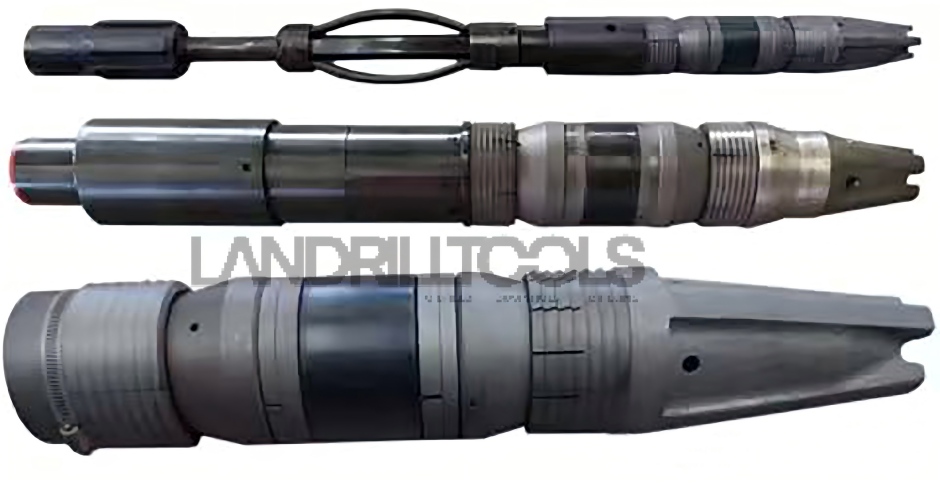
2.Working Principle
After the mechanical cement retainer is connected to the mechanical setting tool, it is run downhole on tubing to the predetermined position. The tubing is then picked up, rotated, and set down again to release the upper slips. The tubing is pulled to set the cement retainer, then rotated to release (drop off). The mechanical setting tool is then re-inserted into the retainer to open the valve body, allowing squeeze cementing operations to be performed.
3.Application
The cement retainer is mainly used for temporary or permanent plugging of oil, gas, and water zones or for secondary cementing. Through the retainer, cement slurry is squeezed into the annulus of the well section requiring isolation or into formation fractures and pores, thereby achieving plugging and leak repair.
4.Features
(1)Compact structure and small outer diameter, easy to mill out;
(2)Can be set directly with a mechanical setting tool;
(3)Run on tubing, no additional equipment required;
(4)Setting and squeeze cementing can be completed in a single trip;
(5)Can withstand relatively high pressures;
(6)Conventional rubber elements are recommended for use at temperatures within 150°C.
Post time: Nov-17-2026


 5-1203,Dahua Industrial Zone, No.2 Yunshui Road,Hi-tech development zone, Xi'an, 710065,China
 86-13609153141


