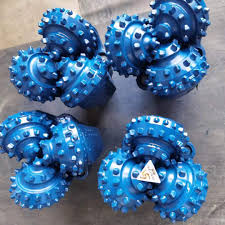
In oil drilling operations, the drill bit is the core tool for breaking rock, and its performance directly affects drilling efficiency and cost. Faced with complex and variable formation conditions, correctly selecting roller cone bits and diamond bits has become a key task for drilling engineers.
01 Roller Cone Bits: Versatile Tools Adapting to Formations
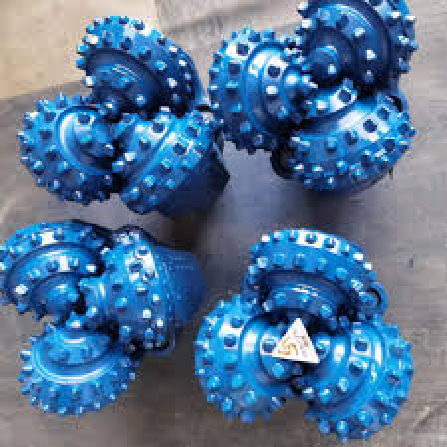 Since their introduction in 1909, roller cone bits have become the most widely used bit type in rotary drilling. Their unique multi·cone structure allows them to adapt to various formation conditions from soft to extremely hard.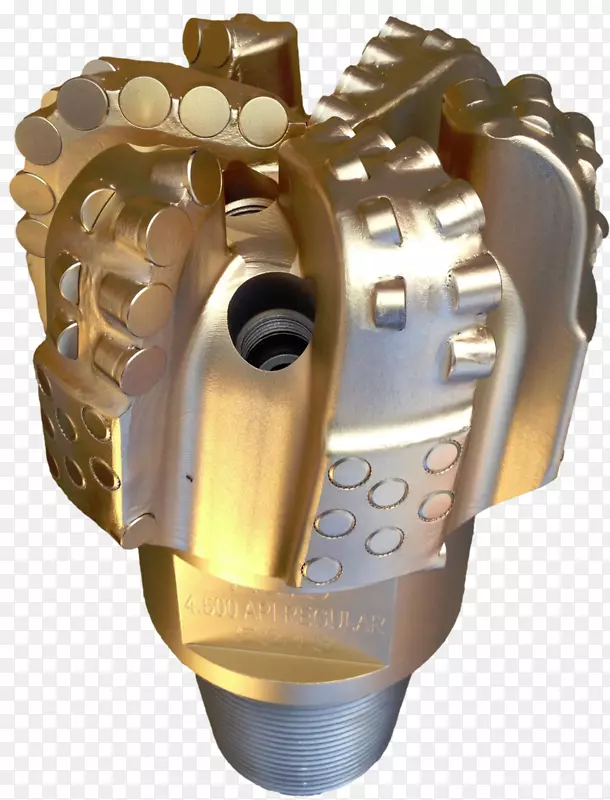
Structure and Core Technology
A roller cone bit consists of five major components:
· Bit body: Three cone legs welded together, with a connection thread at the top.
· Cones: Tapered metal bodies with milled teeth or tungsten carbide inserts (TCI) on the surface.
· Bearing system: Includes four sets of bearings: large, medium, small and thrust.
· Nozzles: Typically 3·4 nozzles with diameters of 7·14 mm.
· Lubrication and seal system: Rubber or metal seals combined with a pressure compensation device.
The bearing seal technology is a key breakthrough in roller cone bits. Modern bits use a pressure·compensated lubrication system that maintains dynamic balance between the lubricant pressure in the bearing chamber and the downhole drilling fluid column pressure through a pressure transmission passage, a pressure compensation membrane and a lubricant cup.
Classification System and IADC Code
The International Association of Drilling Contractors (IADC) has established a global standard for classifying roller cone bits, using a three·digit code system:
· First digit: Tooth type and applicable formation
· 1: Milled tooth, soft formation
· 2: Milled tooth, medium to medium·hard formation
· 3: Milled tooth, hard, abrasive formation
· 5: TCI, soft to medium formation
· 6: TCI, medium·hard formation
· 7: TCI, hard, abrasive formation
· 8: TCI, extremely hard, highly abrasive formation
· Second digit: Formation hardness subgrade (1·4, larger number indicates harder formation)
· Third digit: Bit structural features
· 4: Sealed rolling bearing
· 6: Sealed journal bearing
· 7: Sealed journal bearing + gauge protection with TCI
· 8: Kickoff bit for directional wells
Simplified IADC Classification System for Roller Cone Bits
|
1st Digit |
Tooth Type |
Applicable Formation |
2nd Digit |
Hardness Grade |
|
1 |
Milled tooth |
Soft formation | 1 |
Very soft |
|
2 |
Milled tooth |
Medium to medium-hard | 2 |
Soft |
|
3 |
Milled tooth |
Hard formation | 3 |
Medium-hard |
|
5 |
TCI |
Soft to medium | 4 |
Hard |
|
6 |
TCI |
Medium-hard | ||
|
7 |
TCI |
Hard formation | ||
|
8 |
TCI |
Extremely hard formation |
Rock Breaking Mechanism and Motion Characteristics
When a roller cone bit operates, it exhibits three composite motions:
· Revolution: The cones rotate clockwise with the bit body.
· Rotation: The teeth rotate counter‑clockwise around the cone axis.
· Sliding: Includes radial and tangential sliding.
This composite motion produces a dual rock‑breaking effect:
1. Impact crushing: Alternating contact of single and double teeth creates vertical vibration, generating impact load.
2. Shear cutting: Achieved by overhang, offset and multi‑cone geometry, enabling rock shearing.
Bit Selection Strategy and Formation Matching
Basic principles for selecting roller cone bits according to rock properties:
· Soft formations: Choose bits with offset, overhang, and multi‑cone design; equipped with tall, wide, widely spaced milled teeth or TCI.
· Medium‑hard formations: Reduce offset, overhang, and multi‑cone values; use short, narrow, closely spaced teeth.
· Hard and abrasive formations: Use single‑cone geometry, no overhang, no offset; equip with spherical or conical‑spherical TCI.
· Crooked‑hole prone formations: Select short‑tooth bits with little or no offset and no gauge protection, and choose a bit slightly softer than actual formation.
· Interbedded soft‑hard formations: Select bit based on the harder rock, and adjust drilling parameters dynamically.
Special condition responses:
· Slim holes (<177 mm): Use single‑cone bits, which have larger cones, teeth and bearings for higher strength.
· Directional drilling: Choose bits with IADC third digit 8 (dedicated kickoff bits).
02 Diamond Bits: The Ultimate Tool for Hard Formations
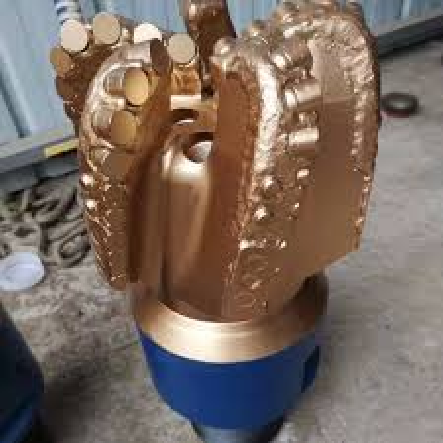
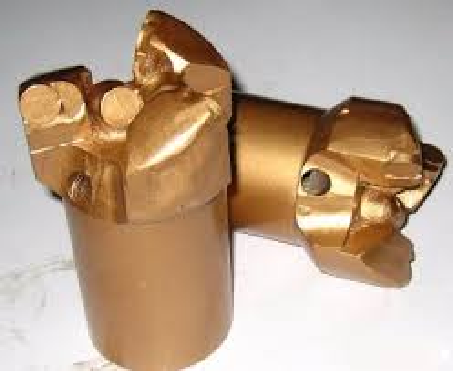
Diamond has the highest natural hardness (Mohs hardness 10, compressive strength up to 8800 MPa, wear resistance 9000 times that of steel). Diamond bits leverage this property to become the ultimate weapon for tackling hard formations.
Classification and Technological Evolution
Modern diamond bits are mainly divided into three types:
1. Surface‑set diamond bits
· Diamond particles exposed on the crown surface.
· Suitable for medium‑hard to hard formations.
· Diamond size grading:
· Soft formations: 2 stones/carat (approx. 4 mm diameter)
· Medium‑hard formations: 3‑4 stones/carat (approx. 3.6 mm)
· Hard formations: 10‑15 stones/carat (approx. 2.0 mm)
2. Impregnated diamond bits
· Diamonds embedded in the matrix (60‑400 stones/carat).
· Suitable for very hard and abrasive formations (chert, siliceous dolomite, etc.).
· Self‑sharpening achieved by matrix wear.
3. PDC bits (Polycrystalline Diamond Compact)
· First introduced by General Electric in 1973.
· Cutter structure: diamond layer + tungsten carbide substrate.
· Applicable formations: soft to medium‑hard homogeneous formations.
Structure and Key Design Parameters
Diamond bits have an integral body with no moving parts, mainly consisting of:
· Steel body: Medium carbon steel, threaded top.
· Matrix: Tungsten carbide powder + copper‑based binder metal, hardness HRC 30‑45.
· Cutting elements: Natural/synthetic diamonds or PDC cutters.
· Hydraulic design: Nozzles, waterways (radial, spiral, etc.).
Key design parameters:
· Diamond concentration: Adjust according to formation abrasiveness – higher concentration for more abrasive formations.
· Exposure height:
· Soft formations: 1/3 of diamond diameter
· Hard formations: 1/6‑1/10 of diamond diameter
· Crown shape: Flat (homogeneous formations), round (hard formations), serrated (abrasive formations).
Rock Breaking Mechanism and Formation Response
The rock‑breaking mode of diamond bits changes with formation properties:
· Plastic formations (mudstone, gypsum, etc.) – Similar to a “ploughing” process; diamonds penetrate and cause plastic flow of the rock.
· Brittle formations (quartz sandstone, etc.) – Produces volumetric crushing pits; cuttings size is 2‑4 times the diamond exposure, very efficient.
· Hard rocks (chert, siliceous rock) – Use impregnated bits; breaking is by micro‑cutting and scratching, similar to grinding with a wheel.
Advantages and Limitations of PDC Bits
As a revolutionary product within the diamond bit family, PDC bits have unique advantages:
Structural features:
· Steel‑body PDC bit: One‑piece medium carbon steel, surface hardened.
· Matrix‑body PDC bit: Upper steel body + lower tungsten carbide matrix – better performance.
Profile design:
· Parabolic: Soft formations, high footage, high ROP.
· Round: Suitable for rotary table drilling, helps penetrate hard interbeds.
· Conical: High‑speed drilling, good penetration.
Limitations:
· Not suitable for gravel beds or soft‑hard interbedded formations.
· Temperature limitation (above 350°C wear accelerates; at 700°C strength fails).
· Lower impact resistance; new cutters are prone to edge chipping.
Comparison of Diamond Bit Applicability by Formation
|
Bit Type |
Best Applicable Formation |
Abrasiveness Resistance |
Impact Resistance |
Temperature Limit |
Drilling Parameter Characteristics |
|
Surface set diamond |
Medium hard to hard |
High |
Medium |
860°C |
Low WOB, high RPM |
|
Impregnated diamond |
Very hard, abrasive |
Very high |
Medium |
860°C |
Low WOB, high RPM |
|
PDC bit |
Soft to medium hard homogeneous |
Medium |
Low |
350°C |
Low WOB, high RPM |
03 Scientific Selection Guide: Matching Formation and Operational Needs
Golden Rules for Roller Cone Bit Selection
1. Formation hardness matching
· Soft formations: choose bits with high offset, overhang, multi‑cone, and wedge‑shaped or scoop‑shaped teeth.
· Hard formations: use single‑cone, no offset, and spherical or conical‑spherical teeth.
2. Handling abrasiveness
· For abrasive formations, select TCI bits with gauge protection.
· If outer row teeth are rounded while inner teeth have little wear, increase gauge protection on the next bit.
3. Special condition responses
· Crooked‑hole prone formations: choose short‑tooth bits with little or no offset; select a bit slightly softer than actual formation.
· Soft‑hard interbedded layers: select bit based on the harder rock, adjust parameters dynamically.
· Deep sections: choose bits with high total footage to compensate for tripping time loss.
Diamond Bit Selection Strategy
1. When to use PDC bits
· Best application: long homogeneous soft to medium‑hard formations (shale, mudstone, gypsum, etc.).
· Prohibited applications: gravel beds, chert interlayers, soft‑hard interbedded formations.
· Parameter setting: low WOB (30‑60 kN), high RPM (100‑300 rpm), high flow rate.
2. When to use natural/synthetic diamond bits
· Hard to very hard formations (granite, quartz sandstone, etc.).
· Highly abrasive formations (chert, siliceous dolomite).
· Turbodrilling, deep and ultra‑deep wells, coring operations.
3. Special requirements for coring bits
· Roller cone coring bits: four‑cone (conical/cylindrical) or six‑cone (full‑barrel) design.
· Diamond coring bits: cutters must be symmetrically arranged with consistent wear resistance.
· Key indicator: inner bore concentric with outer diameter to avoid elliptical core.
Downhole Anomaly Diagnosis and Handling
Identifying roller cone bit operating conditions:
· Bearing failure: Cyclical rotary table bouncing, worsening under high WOB, ROP drops but pump pressure normal.
· Lost cone: Severe torque fluctuation, weight indicator swings wildly, change in string length when picked up.
· Teeth worn flat: Reduced rotary table load, no bouncing, sharp ROP decline.
Diamond bit usage prohibitions:
· Bottom hole must be clean before running in hole; ensure no metal junk.
· Start drilling with light WOB, low RPM for “break‑in” (0.5 m bottom hole profiling).
· Avoid reaming; if necessary, perform with light WOB, low RPM, and steady operation.
04 Cutting‑edge Trends and Field Practice Points
Technological innovation directions
High‑pressure jet drilling technology:
· Uses ultra‑high pressure jets (150‑200 MPa) to assist rock breaking.
· Downhole intensifiers are a focus of R&D; tests show ROP can increase 3‑5 times.
· Technical challenges include ultra‑high pressure sealing and transmission.
Intelligent bit systems:
· Embedded sensors monitor bit condition in real time.
· Adaptive adjustment of cutting parameters to match formation changes.
· Big data analysis to optimize bit selection and predict service life.
Golden Rules in the Field
1. Deciding when to pull out of hole
· Continuous ROP decline (in homogeneous formations).
· Sudden ROP drop with ineffective corrective measures (formation change).
· Sharp torque increase accompanied by ROP drop (bit damage).
· Sudden pump pressure drop (lost nozzle or washed‑out drill string).
2. Measures to extend bit life
· Run new bit with light WOB and low RPM to break in.
· Use a bit protector (anti‑bouncing device).
· Periodic short trips to clear bottom hole debris.
· Avoid excessive rotating on bottom.
3. Economic analysis
· Calculate cost per meter = (bit cost + drilling time cost) / footage.
· Even though PDC bits have higher unit cost, in suitable formations a single PDC bit can drill 3‑5 times the footage of a roller cone bit.
· In deep sections, prioritize bits with high total footage to compensate for tripping time losses.
Bit selection is a precise technology combining scientific theory and field experience. Roller cone bits, with their wide adaptability, remain the most common bit type today. Diamond bits, especially PDC bits, demonstrate unparalleled efficiency in specific formations.
Mastering the IADC classification system, understanding the rock‑breaking mechanisms of different bits, and comprehensively evaluating lithology, wellbore configuration and operational requirements will achieve the perfect match between bit and formation. With the application of downhole sensors, big data analytics and artificial intelligence, bit selection is moving from experience‑based decisions to intelligent precision matching, continuously driving revolutionary improvements in drilling efficiency.
Contact :Jessie Zhou
Mobile/Whatsapp:+0086-18109206861
Email: energy@landrilltools.com
Post time: Apr-30-2026


 5-1203,Dahua Industrial Zone, No.2 Yunshui Road,Hi-tech development zone, Xi'an, 710065,China
  86-13609153141