



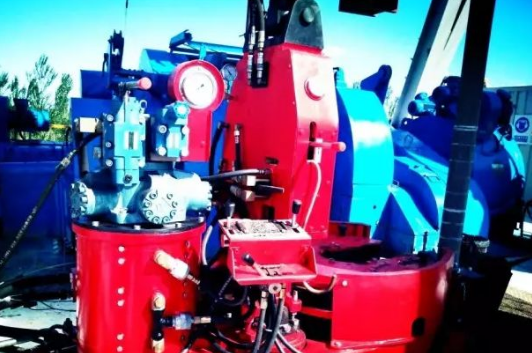
Hydraulic power tongs are indispensable and important wellhead tools in drilling team operations. Their performance, operation, maintenance and usage directly affect the construction safety, efficiency and benefits of the drilling team. With a large number of new personnel in the drilling team, it is even more necessary to strengthen training on the operation, maintenance and upkeep of hydraulic power tongs, enabling operators to truly understand their principles, structure, purpose and performance; be able to operate, maintain and troubleshoot them, so as to achieve intrinsic safety.
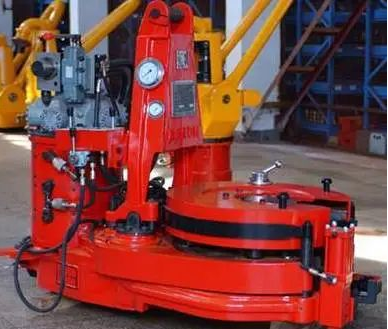
Operating Procedures for Hydraulic Power Tongs
01
Open the air line valve from the drilling rig to the tongs.
02
Start the oil pump and open the one-way air valve to run the pump under no-load condition. The pressure on the system pressure gauge shall not exceed 2.5 MPa for normal operation.
03
After verifying that the size of the jaw assembly of the tong head matches the drill pipe joint, rotate the two positioning handles on the tong head to the corresponding positions according to make-up or break-out requirements.
04
Operate the two-way air valve of the transfer cylinder to smoothly move the tongs to the wellhead. It is strictly prohibited to fully open the air valve at one time, as this will cause the tongs to move rapidly toward the wellhead and result in impact. If the height of the tongs is inappropriate, operate the hydraulic lifting cylinder to adjust to the correct position.
05
After the tongs are positioned at the wellhead and the drill pipe enters the tongs through the opening, check whether the plug screws on the upper and lower parts of the tong head are closely fitted with the pin and box joints. Then operate the two-way air valve of the clamping cylinder to clamp the joint with the lower jaw, set the two-way air valve of the transfer cylinder to the neutral position, and release the air.
06
According to the needs of make-up or break-out, switch the two-way air valve of the high and low gears to the corresponding position. Gear shifting can be performed without stopping the machine during operation.
07
The forward and reverse rotation of the motor is achieved through the H-type manual directional control valve. Adjust the handle position according to make-up or break-out requirements.
08
Reset: The process of aligning the openings of the tong head with each other. After completing one make-up or break-out operation, the H-type manual directional control valve must be operated to rotate the tong head in the reverse direction of the working state. During reset, depending on the distance between the openings, operate the two-way gear shift air valve and use high/low gear switching to achieve alignment. When resetting in high gear, minimize the use of the H-type manual directional control valve and proficiently use the two-way air valve to reduce inertial impact.
09
Do not lift the drill pipe before the pin joint is fully unscrewed from the box joint to prevent slipping and free fall. Do not lift the drill string before the upper jaw releases the drill tool to avoid pulling out the floating part of the tong head or causing unnecessary damage due to the drill tool falling.
10
Operate the two-way air valve of the clamping cylinder to the position opposite to the working position, so that the lower jaw returns to the neutral position and aligns with the opening.
11
Operate the two-way air valve of the transfer cylinder to smoothly move the tongs away from the wellhead.
12
After completing the entire tripping-in or tripping-out operation, set all hydraulic and air valves to the neutral position, turn the one-way valve to the closed position, and stop the pump. Close the air valve from the drilling rig tightly to cut off the air circuit.
13
During transportation, properly seal the hydraulic and air line joints to prevent contamination from entering the pipelines.
14
The positions of the positioning handles for the upper and lower jaws are determined by make-up or break-out requirements. However, when changing positions, all openings of the tong head must be aligned before operation; otherwise, the reset mechanism will fail.
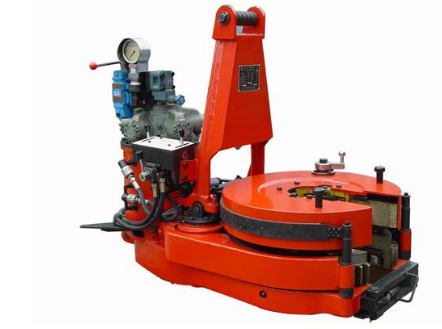
Maintenance of Hydraulic Power Tongs
01
Establish a post responsibility system.
02
Clean or replace the filter element of the hydraulic system filter in a timely manner according to usage conditions to prevent clogging by contaminants, which may affect normal operation.
03
After the new tongs are put into use, replace the hydraulic oil (or let it settle and replace) within one month, and then replace the hydraulic oil every six months thereafter. During operation, the oil level in the tank shall not be lower than the lower limit of the oil level indicator; if it is lower, replenish it immediately. When adding oil to the tank, avoid mixing with other debris.
04
Rinse the tong head with clean water after each tripping operation, dry it with compressed air in summer, and with steam in winter. After cleaning the ramp plates and rollers, apply a thin layer of grease. Ensure the ramp plates are clean and the rollers and pin shafts rotate flexibly.
05
The maintenance requirements for the transmission system bearings are the same as those for the air compressor bearing housing.
06
After each tripping-in or tripping-out operation, clean the transfer cylinder and clamping cylinder with clean water, wipe the piston rods dry with cotton yarn and apply a thin layer of grease, and retract the extended parts fully into the cylinder barrels.
Precautions for the Use of Hydraulic Power Tongs
01
To ensure the normal operation of hydraulic components, must ensure the hydraulic oil is “clean”. Clean and inspect the high-pressure filter element weekly. When adding oil to the tank, avoid mixing with other debris.
02
Apply grease for maintenance before each tripping operation.
03
After each tripping-in or tripping-out operation, rinse with clean water, dry with compressed air, apply grease to the ramp plates, rollers, and piston rods of the two cylinders for rust prevention, and fully retract the extended parts of the cylinders into the cylinder barrels.
04
Before make-up or break-out, check whether the door frame is properly closed; otherwise, it may easily cause housing deformation and damage the tongs.
05
During make-up or break-out operations, slowly move the handle of the manual directional control valve. Only after the pipe string is fully and reliably clamped can make-up or break-out be performed.
06
When replacing parts such as jaw plates and dies, the power tongs must be moved away from the wellhead and the hydraulic power unit must be shut down to prevent accidents.
07
Clamp the joint in high gear. When the tongs stop rotating after make-up, adjust the pressure of the tank relief valve. (Note: Never adjust the pressure in low gear, as the torque in low gear is too high and will damage the drill pipe joint.)
08
Replace the molybdenum disulfide grease in the planetary gearbox once a year (grease is not allowed).
09
Select high-quality dies to ensure improved work efficiency. Long-term use of Type B elevator dies may damage the die grooves on the jaw plates, causing the dies to fall into the wellhead.
Contact :Jessie Zhou
Mobile/Whatsapp:+0086-18109206861
Email: energy@landrilltools.com
Post time: Nov-26-2025

 5-1203 Dahua Digital Industrial Park Tiangu 6th Road,Hi-tech development Zone Xi'an, China
  86-13609153141

