



In the “underground battlefield” of oil and gas extraction, packers are the “sealing guardians” that protect wellbore safety. They can isolate pressures of different formations, prevent fluid cross-flow, and support string loads, serving as core tools to ensure the stability of the entire process of drilling, well completion, and oil production. However, downhole conditions vary drastically: some wells have a temperature of only tens of degrees Celsius, while others exceed 200°C; some have stable pressure, while others experience frequent fluctuations; some contain conventional crude oil, while others hold corrosive “beasts” such as hydrogen sulfide (H₂S).
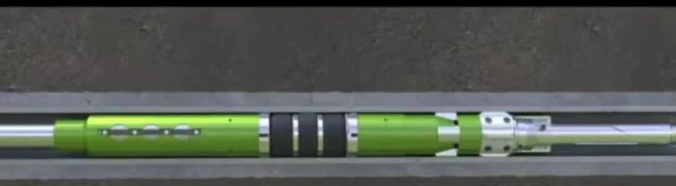
API 11D1 Standard for Downhole Tools in Petroleum and Natural Gas Industry – Packers and Bridge Plugs clearly specifies that packer classes increase in performance level from V6 to V0: the smaller the number, the more stringent the performance requirements. V6 is the “basic entry level,” and V0 is the “ultimate performance level,” with each class corresponding to clear testing standards and applicable scenarios.
Today, we will help you clarify the core differences among these 7 classes and avoid misconceptions in packer selection.
Core Logic of Class Classification in API 11D1
Many people confuse the order of packer classes. The key point to remember is that the class design of API 11D1 follows the principle of “the smaller the number, the more comprehensive the assessment.” An increase in class level means that testing items gradually add stringent conditions (such as temperature cycling, axial loads, gas sealing, and corrosive environments) to the initial simple static sealing test.
The essence of this classification is “matching on demand” — it not only avoids cost waste caused by using high-end equipment in conventional wells but also prevents safety accidents resulting from using low-class equipment in extreme wells.
Class V6: Entry-Level “Garrison Soldiers” with Basic Standards Defined by Manufacturers
Technical Meaning
Class V6 is the lowest design verification class for packers. Its testing methods and acceptance criteria are defined by manufacturers themselves. API 11D1 only specifies a basic framework (e.g., setting reliability, shear load testing) and has no unified mandatory performance indicators. Its core positioning is to “meet basic sealing requirements in specific simple scenarios.”
Applicable Well Conditions for Class V6
- Shallow wells (well depth usually <1,000 meters);
- Working pressure ≤20 MPa (approximately 200 kg);
- Working temperature ≤80°C;
- Medium: fresh water, conventional crude oil;
- No dynamic loads (e.g., no well workover or stimulation operations, with the string completely stationary);
- Typical scenarios: onshore shallow water injection wells, temporary plugging of abandoned wells.
Testing Requirements for Class V6
No mandatory testing requirements are imposed; testing can be conducted in accordance with standards set by manufacturers. Typically, a rated working pressure test is performed under room temperature conditions, requiring static sealing for 10 minutes without leakage. There is no requirement for temperature cycling testing, dynamic load testing, or gas sealing verification.
Class V5: Basic-Version “Patrol Soldiers” — Minimum Guarantee for Liquid Sealing
Technical Meaning
On the basis of Class V6, Class V5 adds unified liquid sealing testing. It is the mandatory “minimum performance threshold” specified by API 11D1, with its core assessment focusing on static sealing reliability under liquid medium.
Applicable Well Conditions for Class V5
- Shallow to medium-depth wells (well depth: 1,000-2,000 meters);
- Working pressure ≤34.5 MPa (approximately 350 kg);
- Working temperature ≤93°C;
- Medium: liquids such as crude oil and salt water;
- Stable working conditions, with pressure fluctuation range <10% of the rated pressure;
- Typical scenarios: oil production stage of onshore conventional oil wells, non-gas flooding development wells.
- Testing Requirements for Class V5 (Core Indicators of API 11D1)
- Liquid static pressure test: Maintain pressure at the rated pressure for 15 minutes without liquid leakage;
- Setting reliability test: Use ±10% of the rated setting force for testing to ensure effective expansion of seals;
No temperature cycling testing or axial load testing;
No requirement for gas sealing verification (only liquid medium is considered).
Class V4: Advanced-Version “Sentinels” Capable of Withstanding Axial Loads
Technical Meaning
On the basis of Class V5, Class V4 adds axial load testing. It can adapt to axial forces caused by string expansion/contraction and self-weight, with its core improvement lying in enhancing “the deformation resistance of seals.”
Applicable Well Conditions for Class V4
- Well depth: 2,000-3,000 meters;
- Working pressure ≤69 MPa (approximately 700 kg);
- Working temperature ≤121°C;
- Medium: oil-gas-water mixture, with CO₂ partial pressure ≤1 MPa;
- Minor axial loads exist (e.g., thermal expansion/contraction of the string, minor vibrations);
- Typical scenarios: production stage of conventional pumping wells and non-fractured gas wells.
Testing Requirements for Class V4
- Pass all Class V5 tests;
- Axial load test: Apply ±50 kN axial force (to simulate string expansion/contraction) and maintain pressure for 15 minutes without leakage;
- Liquid cycling test: Conduct 10 pressure rise and fall cycles at the rated pressure, ensuring effective sealing;
- Gas sealing testing and temperature cycling testing are still not required.
Class V3: Enhanced-Version “Guards” Suitable for Temperature Fluctuation Conditions
Technical Meaning
On the basis of Class V4, Class V3 adds temperature cycling testing. It can adapt to the contraction/expansion of seals caused by frequent downhole temperature changes, making it a key class for “the transition from conventional wells to complex wells.”
Applicable Well Conditions for Class V3
- Medium to deep wells (3,000-4,000 meters);
- Working pressure ≤103 MPa (approximately 1,050 kg);
- Working temperature ≤150°C (temperature fluctuation range ≤50°C);
- Medium contains a small amount of gas (gas-oil ratio ≤500), with CO₂ partial pressure ≤2 MPa;
- Dual temperature/pressure fluctuations exist (e.g., intermittent flowing wells);
- Typical scenarios: development stage of shallow gas wells and conventional tight oil wells.
Testing Requirements for Class V3
- Pass all Class V4 tests;
- Temperature cycling test: Conduct 3 cycles between -29°C and the rated temperature, maintaining pressure for 30 minutes after each heating/cooling process without leakage;
- Pressure cycling test: Conduct 100 cycles from 0 to 80% of the rated pressure, ensuring stable sealing performance;
Testing still mainly uses liquid medium, with no mandatory requirement for gas sealing.
Contact :Jessie Zhou
Mobile/Whatsapp:+0086-18109206861
Email: energy@landrilltools.com
Post time: Dec-11-2025

 5-1203 Dahua Digital Industrial Park Tiangu 6th Road,Hi-tech development Zone Xi'an, China
  86-13609153141

